How Your Neighbors Can Increase (or Destroy) Your Equity
Ask any appraiser what drives a home’s market value, and they’ll point to square footage, recent comps, and structural condition. But ask anyone who has ever tried to sell a house next door to a property with overgrown lawns, an unpainted facade, or abandoned or boarded-up houses, and they’ll tell you the truth: your neighborhood holds a massive stake in your net worth.
In real estate, it’s called the Neighborhood Effect — a powerful, often unpredictable dynamic where the choices made on the other side of your property line directly impact your home’s equity.
Your neighbors and other circumstances beyond their control (such as the rise of crime in the area or job growth in the area) can either add in passive valuation or scare away qualified buyers.
To learn more about how the people next door can make or break your biggest financial asset, read on below.
How Does Home Equity Work? Explained in Simple Words
Home equity is the portion of your home that you actually own outright. It’s the difference between what your house is worth on the market today and how much you still owe on your mortgage.

For example, if your home is valued $500,000 and your remaining mortgage balance is $250,000, your equity is $250,000. Equity grows in two ways: as you pay down your loan each month, and as home values in your area increase over time.
But did you know that $250,000 isn’t just a number on paper? In reality, it’s usable wealth. Through options like a Home Equity Line of Credit (HELOC) or a cash out refinance, homeowners can borrow against their equity to fund major goals. For example, to consolidate debt, pay for tuition, or put down a payment on an investment property.
In the U.S., home equity is the single largest driver of household net worth for the vast majority of Americans. Due to rapid housing appreciation over the last several years, American homeowners are sitting on an unprecedented amount of home equity. According to the Federal Reserve Bank of St.Louis, the real estate equity for Q1 2026 in total U.S. households translates to roughly $34.9 trillion.
How Your Neighbors Can Boost Your Home Equity
Your property’s value is heavily shaped by what economists call positive housing externalities — the benefits created by nearby homes or community improvements. Because home values are based on what’s known in real estate as “comps” (comparable sales of homes nearby), when your neighbors improve their properties or the community is strengthened, your equity goes up.
Here are some of the examples:
The Curb Appeal
When you’re grocery shopping and you see two tomatoes, but one of them is rotten, which one would you choose? If your answer is a fresh tomato (most likely), then you pretty much already understand what curb appeal in real estate is. The thing is, first impressions drive buyer demand. When surrounding homes maintain pristine landscaping, it creates an attractive streetscape.
As stated by ForeverYard, the diligent upkeep of a nearby house can add between 5% and 11% to the value of your home.
High-Priced Arms-Length Home Sales Nearby
When a neighbor closes a high-priced deal, it isn’t just good news for them. It’s what also can instantly boost your home equity. But know that for a sale to affect your home equity, real estate appraisers must first verify that it was a legitimate market transaction. For example, the deal can also be non-arms-length. If your neighbor sells their $500,000 house to their child for $200,000, an appraiser will discard the transaction. The thing is, it reflects family generosity, not true market value.
Real estate valuation relies on CMA (Comparable Market Analysis). Appraisers look backward at recent sales (typically within a 0.50-mile radius) to determine what a bank is willing to lend on your property.
Homeowners Association’s Involvement
In the Journal of Urban Economics, it’s said that homes in HOAs sell for an average 4% premium over similar homes in non-HOA neighborhoods.
But how does it work? The primary way an HAO protects equity is by preventing neighbors from engaging in actions that might lower neighborhood perception. The organization ensures timely lawn care, fence repairs, trash container storage, and other things that prevent the poor upkeep of the neighborhood.
In addition, a proactive HOA board maintains a healthy reserve fund, the collective savings account that’s used to repair roads, roofs, entrance gates, and more.
Neighborhood Watch Groups and Other Safety Initiatives
Crime is an immediate equity killer. Criminology and local economics studies show that property values decline by 1.5% for every 1% rise in crime.
So, neighbors who organize Neighborhood Watch Groups, install security cameras, or work with local city councils can reduce local crime rates. Also, watch groups don’t just report crimes; they report public property damage, code violations, and municipal issues before those minor eyesores drag down the block’s overall curb appeal.
And last but not least, Neighborhood Watch Groups are a source of emotional security. When prospective buyers attend open houses, they walk or drive through the neighborhood to gauge the environment. Seeing neighbors interacting and watching out for one another’s properties creates a strong sense of safety.
How Your Neighbors Can Drag Down Your Home Equity
Unfortunately, just as the people who live nearby can boost your home equity, they can also lower it.
Here’s how they can do it:
Poor Property Maintenance
When a property owner neglects basic upkeep over a prolonged period, it creates a negative externality that damages the market value of every surrounding home. While a messy lawn on a Friday isn’t a disaster, long-term property neglect definitely is. Broken fences, abandoned vehicles, and cluttered yards also fall into this category.
Real estate studies estimate that living across from severely neglected properties causes an immediate 5% to 10% reduction in a home’s appraised value.
Noise, Odors, and Code Violations
Imagine living in a neighborhood with non-stop loud music, late-night parties, or visible trash accumulation. Or all of these and more. Those market conditions make it less likely to find a financially qualified property buyer.
Real estate transactions are time-sensitive. If a nuisance occurs during a private showing, it definitely destroys the first impression. In addition, in some jurisdictions, sellers are legally required to disclose known neighborhood issues on official property disclosure forms.
It goes without saying that homes affected by chronic neighborhood issues sit on the market longer. It leads to buyers assuming there’s something wrong with the property, meaning a home’s estimated current market value may decline.
High Crime or Safety Issues
Pervasive property crimes, such as break-ins, theft, vandalism, and burglary, are common reasons why homebuyers avoid acquiring properties in certain neighborhoods. High-profile or frequent violent crimes incidents have an even more compounding effect. In neighborhoods with such safety concerns, appraisers adjust market values downward to account for longer marketing times and reduced buyer demand.
In addition, higher crime rates mean not only physical and emotional risks. They also result in annual insurance premiums for every house on the block, increasing financial commitment.
Lack of Community Engagement
Try to answer this question honestly: would you feel at peace in a neighborhood where neighbors don’t communicate, participate in Neighborhood Watch activities, or look out for one another’s properties? While it might seem harmless compared to, let’s say, poor property maintenance, it quietly erodes home equity over time as it allows small problems to snowball into major ones.
On the contrary, an engaged block creates a security network through simple daily interaction. Knowing who belongs on the street, when someone is on vacation, or when a suspicious vehicle is parked out front are just some of the things that might give away a trouble, and a cautious neighbor can prevent it.
How Can You Check Equity in Your Home?
In this day and age, unlocking your home’s equity takes a few clicks. Below, you’ll find some of the easiest ways to do this.
Calculate It Manually
It’s pretty easy to estimate your property equity on your own. For this, you need to find your current mortgage balance and look for the principal balance. Next, it’s important to estimate your property’s market value. You can do this by looking up recent sales of similar homes in your neighborhood (with similar square footage, bedroom counts, and condition). Then, subtract the balance from the value; the remaining total gives you your estimated equity.
Home Equity = Current Estimated Market Value – Remaining Mortgage Balance
Request a Comparative Market Analysis
If you’re thinking about selling your house, local real estate agents can calculate a Comparative Market Analysis (CMA). It’s one of the most effective ways to find out your home’s true market value, and, by extension, your actual home equity. A typical CMA evaluates recently sold homes, pending sales, active listings, and expired or cancelled listings. In addition, when an agent prepares a CMA, they make dollar adjustments to the comp prices to match your home improvements (unique features, such as upgrades, renovations, lot size, and more).
Get a Professional Home Appraisal
When precision is a must, a licensed appraiser will evaluate your home in person. They evaluate the condition, upgrades, layout, and hyper-local comp data to deliver you an official valuation. Unlike real estate agents — who might be motivated by securing a listing — an appraiser has no financial stake in the outcome of your home’s value.
Use Rew Online, a Reverse Address Lookup Platform
Manual comps and appraisals work well, but they’re either time-consuming or expensive. If you need to know your home equity fast without paying fees, then you can reverse search your address on Rew Online.
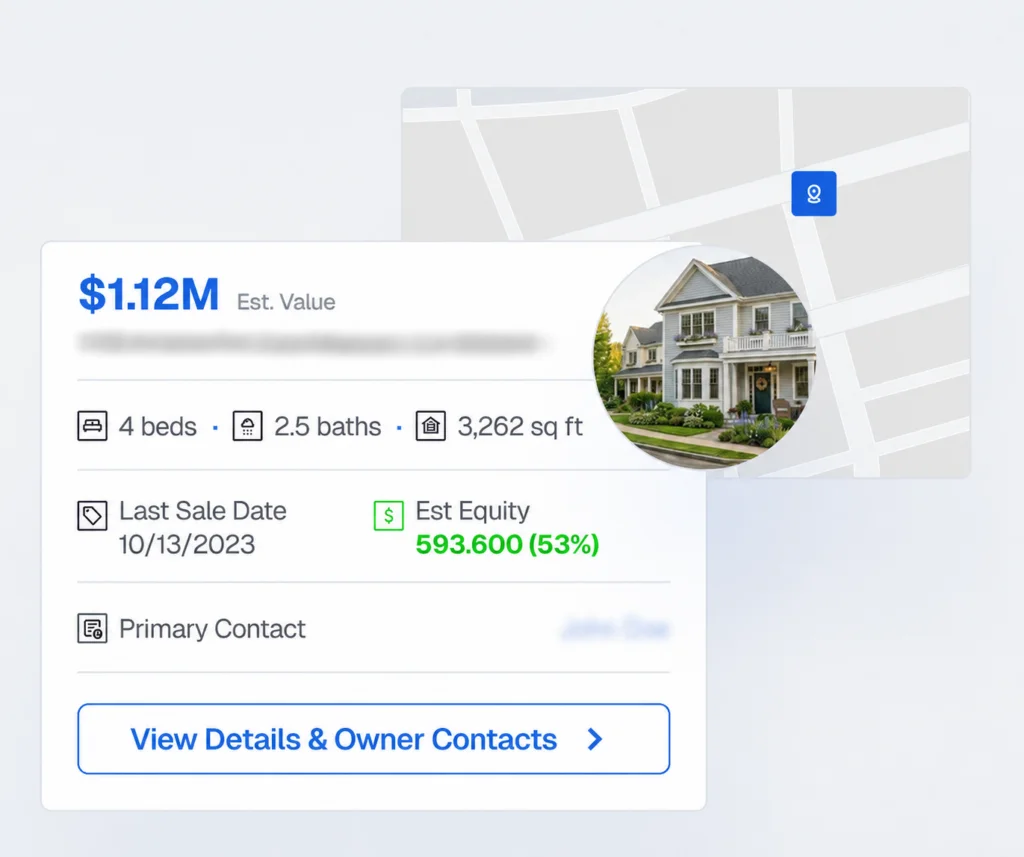
Rew Online is a modern real estate intelligence platform that provides instantaneous results into property ownership and performance. The website delivers accurate information about a property in the U.S., including estimated home equity, pricing and transaction history, median land area, construction year, and more. In addition, it makes it possible to gain insight into previous property owners. So, if you’ve been wondering who lived in your property before you, it’s possible to quickly find this out.
Conclusion
At the end of the day, your home’s value is a team effort. Maintaining strong community ties and keeping an eye on local comps is the best way to safeguard how much equity you build over time. After all, the more your home appreciates, the lower your loan-to-value ratio drops, which could even help you eliminate private mortgage insurance sooner than expected.
Once you’ve built up that value, your equity becomes a powerful financial tool. Knowing your outstanding balance and market value allows you to tap into your wealth when you need to borrow money for major milestones.
Frequently Asked Questions
How do I build equity in my home faster?
You build equity in two main ways: through local market appreciation and by paying down your mortgage. To speed up the process, you can make extra principal payments each month, make smart home improvements that boost your property’s market value, or choose a shorter loan term (like a 15-year mortgage).
What is a home equity loan, and how does it work?
A home equity loan is a lump-sum loan secured by your home’s equity. With a home equity loan, a borrower receives all the funds upfront and repays the debt over a fixed period with predictable monthly payments and a fixed interest rate. Because home equity loans typically offer lower interest rates than credit cards or personal loans, they are a popular choice for financing major expenses like home renovations or debt consolidation.
What happens when a HELOC draw period ends?
During the draw period of a Home Equity Line of Credit (HELOC), you can borrow funds as needed and often pay only interest. Once the draw period ends, the loan converts to the repayment period. During this phase, you can no longer draw additional funds, and your payments will increase significantly because you must pay back both the principal balance and interest through regular monthly installments.
Is the interest on a home equity loan tax deductible?
The interest on a home equity loan may be tax deductible, but only under specific IRS rules. To qualify, the borrowed funds must be used to buy, build, or substantially improve the home that secures the loan. If you use the money to pay off credit card debt or cover college tuition, the interest is generally not tax-deductible. Always consult a qualified tax professional to see how these rules apply to your situation.
The post How Your Neighbors Can Increase (or Destroy) Your Equity appeared first on Real Estate Weekly.