Chicagoland Agents Build Real Estate Brands Through Local Expertise and Client Trust
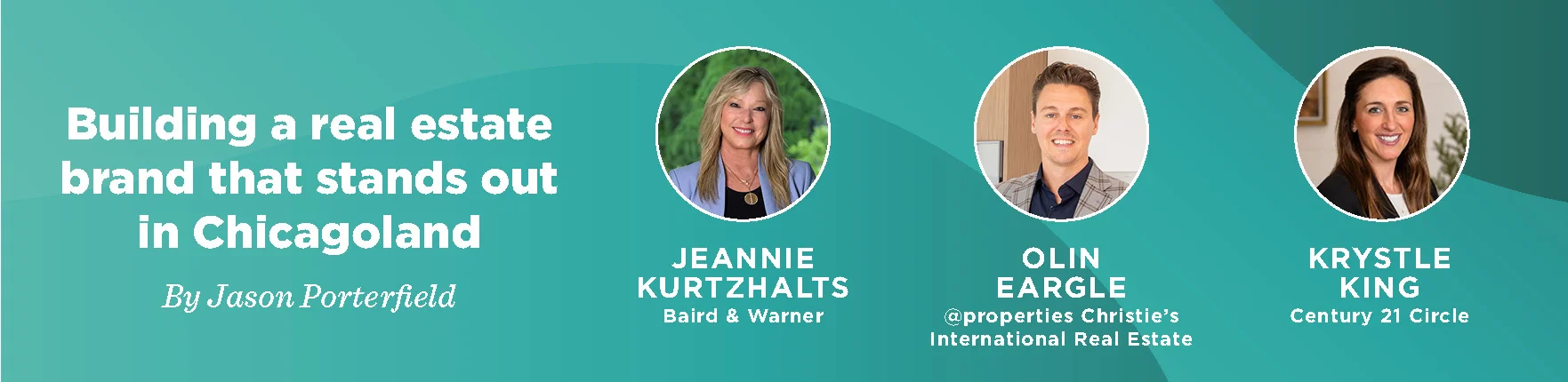
In Chicagoland’s competitive housing market, an agent’s brand has to do more than promise good service. With limited supply, strong demand and thousands of agents competing for clients, the lasting distinction comes from a clear understanding of whom an agent serves and what working with that person feels like. The challenge is to make that value visible without turning a professional identity into a sales pitch.
Olin Eargle, a real estate advisor at @properties Christie’s International Real Estate in Chicago, says basic claims about market knowledge, negotiation and service don’t set an agent apart. Clients should expect those qualities from a capable professional. A brand becomes more useful when it reflects an agent’s real strengths and the experience they can consistently deliver.
“There are thousands of real estate agents here in Chicago,” Eargle said. “I’m not going to be able to differentiate myself by just saying, ‘Hey, I’m Olin, and I’m a Realtor and I offer great service and I’m a good negotiator and I know the market.’ Those are things that clients should really expect from any good agent.”
Define the expertise, then explain its reach
Krystle King, an agent with the Seifert & King Team at Century 21 Circle in Addison, says a credible brand starts with a realistic account of an agent’s expertise. That might center on a geographic area, a price point, a type of property or a particular kind of client. The common thread is knowing the market and the people who rely on the agent to guide them through it.
“Knowledge, experience and education are a huge part of building trust,” King said. She sees a defined audience as a way to sharpen communication: agents can better anticipate which questions matter and what information will help clients make sense of their choices. A focus doesn’t have to restrict the business an agent accepts. It gives the agent a clearer basis for showing where they can be useful.
Eargle works across Chicago and the North Shore, at a range of price points. For him, defining the audience matters more than staking a claim to one neighborhood. A highly local reputation can help an agent become known, but it can also leave prospective clients unsure about the agent’s broader coverage.
He learned that after becoming closely associated with one neighborhood. Two prospective clients who moved elsewhere in Chicago didn’t call because they assumed he only worked in their former area. “You really have to make sure that clients understand where you work and how broad and vast your area of expertise is,” he said. The lesson: familiarity should build recognition without obscuring the full scope of an agent’s work.
The client experience is the brand
Jeannie Kurtzhalts, an agent with Baird & Warner in Winnetka, has seen agents become more adept at creating personal identities and visual branding. But a logo or color palette is only a small part of what clients remember. Kurtzhalts makes a point of attending showings and staying close to the details so clients feel that their home and move receive personal attention.
“A strong brand has to be specific enough that people can describe you when you’re not in the room,” Kurtzhalts said. “It isn’t the logo or your colors. Those are pretty and they’re necessary, but it’s the actual experience that people associate with you. For me, that means very personal, hands-on service.”
That standard applies after a sale as well as during one. Eargle uses a database and customer relationship management system to stay in touch with past and current clients, sharing market information, new listings and invitations to events. He aims to maintain those relationships at a consistent level rather than letting contact fade when a transaction closes.
“It’s important to me that I am not a transactional broker,” he said. “Once the deal is closed, my job is not over. The relationship is not over. My clients end up hearing from me consistently during and after they’ve worked with me. I like to think of it as a lifelong partnership.”
King’s approach shifts with the relationship. She wants past clients to think of her as a resource for anything connected to their homes, even when they aren’t planning a move. For prospective clients, she emphasizes useful market updates and information without pressure. Personal contacts may hear more about her life, alongside reminders that she remains active in real estate.
Kurtzhalts also tailors what she shares to how well she knows the recipient. Past clients still want to understand home and neighborhood values, she says, while a closer relationship can make more personal communication feel natural. The aim is steady relevance, not a constant stream of sales messages.
Social media rewards consistency
Social platforms give agents room to show both their professional work and the personality clients may encounter in person. Kurtzhalts uses Instagram and Facebook to keep in touch with former clients, community members and people in her network. That engagement can then put her in view of others connected to those relationships.
She estimates that roughly 80% of the content on her business page concerns real estate, while her personal page carries little business material. Instagram sits between the two. Kurtzhalts sometimes includes her Siberian huskies, a personal detail that helps convey who she is outside her work.
Eargle also relies most on Instagram, followed by Facebook, with YouTube and LinkedIn playing secondary roles. He aims to keep 80% to 90% of his business account’s content professional, leaving some space for personal updates. His social media manager advises him to publish three quality posts each week and to make video points quickly, with a clear opening that gives viewers a reason to stop scrolling.
“People are scrolling quickly, so give good info and something that will make them want to rewatch that video again or share it,” he said. After previously trying videos of varying lengths, he now favors clips of seven to 10 seconds.
King concentrates on Facebook and Instagram, while keeping an eye on how social habits may change. Her measure of the right platform is practical: agents should choose channels they feel comfortable using and can maintain consistently, where their audience is present. As she puts it, social media can keep an agent top of mind, while business develops from the relationships built there.
Online credibility starts before the first call
A prospective client may search for an agent before making contact, making a current website, visible reviews and a clear Google presence part of the first impression. Kurtzhalts is unsure whether websites generate many leads directly, but she expects people to use them to check an agent’s work: the locations and price points they cover, and the volume of their business.
King says neighborhood content can demonstrate local knowledge and give potential clients a sense of how an agent works. Search results should make it easy to find contact information and assess the agent’s experience, professionalism and personality. That combination can help a prospective client decide whether a first conversation feels comfortable.
Eargle sees testimonials and positive reviews as evidence that an agent has delivered for past clients. He acknowledges that negative reviews can appear, but says a strong collection of client feedback and useful information helps present a fuller picture of the business online.
For agents competing across Chicago and the North Shore, the work of branding is therefore cumulative: define the expertise, show up consistently, and make the client experience easy to recognize. The clearest market position may be the one clients can explain in their own words—and still remember when their housing needs change.
EXPERT SOURCES
Jeannie Kurtzhalts
Baird & Warner
Krystle King
Century 21 Circle
Olin Eargle
@properties Christie’s International Real Estate
The post Building a real estate brand that stands out in Chicagoland appeared first on Chicago Agent Magazine.