Tudor Home Resale Value: Preserve Character and Fix Key Issues
|5 min read
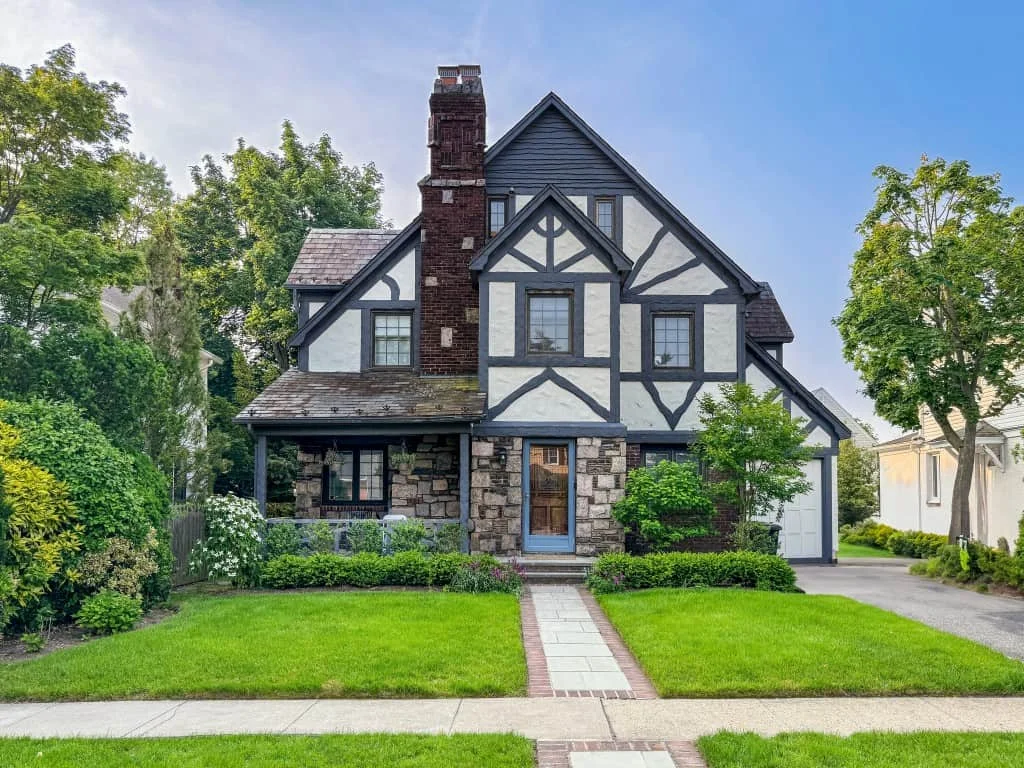
Tudor homes sell on their character: steep gables, half-timbering, leaded windows and the sense of permanence that newer construction can struggle to match. The resale challenge is keeping those qualities visible while fixing the issues that can make buyers hesitate. That balance matters whether you’re restoring a house in [Bronxville, NY](https://www.redfin.com/city/2214/NY/Bronxville) or updating one in [Englewood, NJ](https://www.redfin.com/city/5544/NJ/Englewood). A fresh coat of paint alone won’t do the job; thoughtful preservation and practical upgrades are what help a Tudor stand out. For more on [increasing a home’s resale value](https://www.rocketmortgage.com/learn/how-to-increase-home-value), start with what makes the house distinctive.
## What defines a Tudor-style home?
American Tudor-style homes emerged in the early 20th century, borrowing from medieval English architecture. Buyers still respond to their warmth and substantial appearance. The value strategy is straightforward: preserve the details that give the home its identity, and address the condition problems that could undermine a sale.
Common features include steep roofs and prominent gables; decorative dark half-timbering against stucco or masonry; tall, narrow windows, sometimes with leaded or diamond panes; large chimneys with decorative brickwork; arched entrances; and interiors with exposed beams, hardwood floors and ornate millwork. If you’re considering work on an older property, this guide to [buying and preserving a historic home](https://www.redfin.com/blog/buying-a-historic-home/) offers useful context.
## Protect the details that buyers came to see
In a Tudor, original beams, arched openings, leaded glass, woodwork and masonry aren’t incidental decoration. They’re often the reason a buyer clicked on the listing. Once removed, those features can be expensive or impossible to reproduce.
Huma of [Jersey Digs](https://jerseydigs.com/) says resale value often depends on preserving a home’s distinctive [architectural details](https://www.redfin.com/blog/add-architectural-details-to-your-home/) while adapting it for modern life. Exposed beams, arches, masonry, woodwork and leaded windows can all help sell the house, Huma says, so renovations should avoid erasing its character.
Take stock before work begins. A feature hidden behind newer finishes or damaged over time may be worth restoring. Replacing it with a [modern design](https://www.redfin.com/blog/modern-vs-contemporary-home-designs/) can leave the house less distinctive.
## Repair the hidden problems first
New countertops and [fresh paint](https://www.redfin.com/blog/choosing-paint-color-for-your-home/) are visible improvements, but buyers and inspectors will look beyond them. Structural or mechanical trouble and deferred maintenance can complicate a sale, so tackle those issues before cosmetic projects.
Aleksandr Shapiro, owner of [Bergen Restoration](https://bergenrestoration.com/), recommends repairing the roof, chimney flashing, stucco, timber details and drainage first. Then modernize the kitchen, bathrooms, electrical systems and [HVAC](https://www.redfin.com/blog/choosing-an-hvac-system/) while retaining original windows, millwork, fireplaces and arches. His point is a practical one: a house with its Tudor identity intact and its systems in order has a clearer selling proposition than one made to resemble a generic new build.
## Bring in light without flattening the rooms
Many Tudors feel dark because of deep wood tones, smaller windows and divided [floor plans](https://www.redfin.com/blog/what-is-an-open-floor-plan/). Buyers may prefer brighter, more connected spaces, but that doesn’t mean every wall needs to come down.
[Francie Malina](https://franciemalina.com/) recommends warm white walls, improved lighting, lighter window coverings and refinished floors. For the kitchen, she suggests improving the connection to a dining or family room with a larger opening, an island or clearer sightlines. A full open plan isn’t necessary.
Practical options include:
- Paint in warm whites or soft off-whites that work with the wood.
- Replace heavy drapes with lighter, linen-style treatments.
- Improve [layered lighting](https://www.redfin.com/blog/how-to-use-layered-lighting/) with fixtures suited to the home’s period.
- Refinish dark hardwood floors in a lighter tone.
- Widen a doorway or add a pass-through to open the kitchen sightline.
## Update kitchens and baths with compatible finishes
[Kitchens](https://www.redfin.com/blog/remodeling-a-kitchen/) and bathrooms matter to buyers, but finishes that feel stark or overly modern can clash with Tudor arches and beams. Aim for contemporary function with materials that sit comfortably beside the original details.
Tiffeny Forrest of [The ARRIVED Team](https://thearrivedteam.com/) advises restoring hardwood floors, fireplaces, decorative woodwork, arches and exposed beams where possible, then updating the kitchen, bathrooms, lighting and mechanical systems. That mix gives buyers the character of an older house with the comfort they expect.
Consider warm brass or bronze hardware, Shaker or inset cabinetry, natural stone or honed surfaces, and subway, zellige or handmade tile. Statement lighting can work, too, as long as it nods to the era without turning the room into a period set.
## Make the exterior earn its first impression
For a Tudor, the exterior does much of the selling before a buyer reaches the front door. The front entry, masonry and roofline are part of the home’s pitch, so care and upkeep matter alongside style.
Heather Corrigan of [Heather Corrigan Bergen County](https://heathercorriganbergencounty.com/) recommends cleaning the exterior, keeping the roof and gutters in good condition, restoring original woodwork and doorways, and refreshing stucco. She also points to the Tudor-style front door and mature-looking plants. Corrigan says these touches can bring 14% more buyer engagement than a typical listing. That figure is notable, though the information here doesn’t explain how the comparison was measured.
The broader lesson is that presentation and preservation can make a difference without a full renovation. A cared-for exterior gives buyers a reason to take a closer look.
## Keep exterior upgrades in scale
Wilson Justino of [Justino Contracting](https://justinocontracting.com/) recommends maintaining the steep rooflines, substantial chimney, distinctive windows, masonry and original woodwork. Tudor Revival homes are known for gables, tall narrow windows, varied materials and prominent chimneys; exterior work should respect the home’s scale, materials and craftsmanship.
That can mean cleaning or repointing brick and stone, repainting stucco in an appropriate color, repairing or replacing the front door with an arched or period-style option, and restoring the half-timbering. Low hedges, boxwoods or climbing plants can add [landscape structure](https://www.redfin.com/blog/landscaping-projects-to-increase-property-value/), while lantern-style or wrought-iron fixtures suit the architecture.
## Add space buyers can use
Good presentation helps, but buyers also consider how a house works day to day. Usable [square footage](https://www.redfin.com/blog/how-to-calculate-the-square-footage-of-your-home/) can broaden a Tudor’s appeal when it supports current needs.
[Sungu Development](https://www.sungudevelopment.com/) recommends improving high-impact rooms, upgrading mechanical systems and energy efficiency, and refreshing flooring, millwork and lighting. A more polished, move-in-ready home may support a stronger resale price, though the fragment provides no estimate of the return on specific projects.
Potential additions include a finished basement for a family room, playroom or office; a mudroom; a dedicated [home office](https://www.redfin.com/blog/home-office-design-professional-set-up-ideas-tips/); or [outdoor living](https://www.redfin.com/blog/tips-for-creating-the-ultimate-outdoor-living-space/) such as a stone patio, pergola or garden that complements the house.
The best resale plan for a Tudor isn’t about preserving every old feature unchanged. It’s about knowing which details give the house its appeal, repairing the parts buyers may worry about, and making the home comfortable to live in now. If you’re [planning to sell](https://www.redfin.com/blog/how-to-sell-a-house/) soon—or simply planning ahead—those choices can help protect the character buyers value.
The post [How to Increase the Resale Value of a Tudor-Style House](https://www.redfin.com/blog/resale-value-of-a-tudor-style-house/) appeared first on [Redfin | Real Estate Tips for Home Buying, Selling & More](https://www.redfin.com/blog).
 Tudor homes sell on their character: steep gables, half-timbering, leaded windows and the sense of permanence that newer construction can struggle to match. The resale challenge is keeping those qualities visible while fixing the issues that can make buyers hesitate. That balance matters whether you’re restoring a house in [Bronxville, NY](https://www.redfin.com/city/2214/NY/Bronxville) or updating one in [Englewood, NJ](https://www.redfin.com/city/5544/NJ/Englewood). A fresh coat of paint alone won’t do the job; thoughtful preservation and practical upgrades are what help a Tudor stand out. For more on [increasing a home’s resale value](https://www.rocketmortgage.com/learn/how-to-increase-home-value), start with what makes the house distinctive.
## What defines a Tudor-style home?
American Tudor-style homes emerged in the early 20th century, borrowing from medieval English architecture. Buyers still respond to their warmth and substantial appearance. The value strategy is straightforward: preserve the details that give the home its identity, and address the condition problems that could undermine a sale.
Common features include steep roofs and prominent gables; decorative dark half-timbering against stucco or masonry; tall, narrow windows, sometimes with leaded or diamond panes; large chimneys with decorative brickwork; arched entrances; and interiors with exposed beams, hardwood floors and ornate millwork. If you’re considering work on an older property, this guide to [buying and preserving a historic home](https://www.redfin.com/blog/buying-a-historic-home/) offers useful context.