Harris County CMBS Loan Dispute Centers on $46.85M Property Collateral
A $46.85 million commercial loan tied to two Harris County properties lost its collateral after a foreclosure by a lender with an earlier, senior lien, according to a complaint filed by the BMO 2024-5C5 Mortgage Trust. The case puts loan underwriting and representations made during commercial mortgage-backed securities sales under scrutiny. Its central question is narrow but consequential: what protections did the trust receive when it bought the loan, and what remedy is available if the complaint’s account of the lien is borne out?
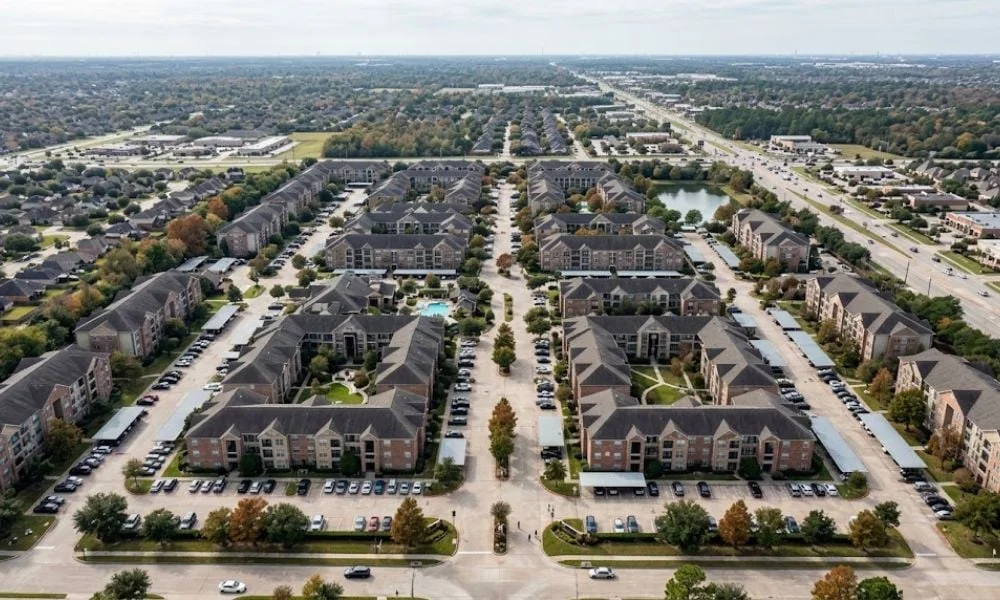
Computershare Trust Company, National Association, acting as trustee for the trust, alleges Starwood Mortgage Capital LLC sold it a loan originated in April 2024 and secured by The Pointe and Oak Shadows. The complaint says Starwood represented that the deed of trust on the properties held first priority. That assurance matters because a lender’s position in the lien order can determine whether its claim survives a foreclosure by another creditor.
The filing describes a mismatch between that representation and the properties’ recorded debt. If the trust’s loan was behind an existing lien, the collateral may not have provided the protection the sale documents promised. The complaint makes that allegation; it doesn’t establish that Starwood knew about the earlier debt or that a court has accepted the trust’s interpretation of the contract.
A senior lien and a foreclosure
The properties were already subject to a $27.601 million deed of trust held by Thistle Creek Partners, LP, the filing alleges. That lien was recorded in Harris County before Starwood originated its $46.85 million loan. The gap between the alleged senior debt and the later loan helps explain why priority is the dispute’s central factual issue, though the complaint alone doesn’t show what searches or reviews were conducted before the loan was sold.
Thistle Creek later exercised its power of sale and foreclosed under Texas law, according to the complaint. It took title through one or more affiliates, and the foreclosure eliminated the liens securing the trust’s loan. The trust alleges it was left without property collateral and without contractual rights to stop the sale, take possession, collect rents or seek a receiver.
That loss is different from a borrower simply falling behind on payments. A lender holding a junior lien generally depends on the value left after claims ahead of it are addressed; a foreclosure by a senior creditor can therefore leave the junior lender with little or no practical security. Here, the trust says the sale removed the very property rights that were meant to secure its loan. A $46.85 million claim without that collateral is a materially different credit position.
Here’s the central issue for the securitization: the trust says the senior lien wasn’t disclosed, and that Starwood’s loan sale agreement contained several promises contradicted by the lien. Those included assurances that the loan documents were enforceable, that they offered adequate means to realize on the security, and that the deed of trust was a “legal, valid and enforceable first lien” with no senior mortgage liens ahead of it. The allegations put the wording of those promises alongside the loan’s actual lien position, rather than treating the dispute as a routine payment default.
What the loan sale promises mean
In a commercial mortgage-backed securities transaction, a loan is sold into a structure that serves investors through a trust. The trust’s complaint focuses on the representations made when this particular loan was sold: whether the documents accurately described its security and what Starwood agreed to do if those representations proved false. Similar loan sale agreements often set out procedures for a claimed defect, including notice and an opportunity to cure, but the actual obligations here depend on the contract terms cited in the case.
A first lien representation isn’t merely descriptive. It speaks to the creditor’s place in line if the property is sold to satisfy debt. If that place was misstated, the trust argues, the loan’s contractual and practical value were affected. And this is the part most people overlook: even a detailed agreement can only allocate the consequences of a defect after the parties establish what was promised, what was known, and whether the required procedures were followed.
The numbers here are underwhelming in one important respect: the complaint gives the stated loan and senior lien amounts, but those figures alone don’t establish the property values, the amount recovered through foreclosure or the trust’s ultimate loss. Those are separate questions. The trust is seeking a remedy tied to the purchase price, while the final amount, if any, remains for the case to determine.
Repurchase demand and relief sought
The trust’s special servicer, CWCapital Asset Management LLC, concluded that the alleged breaches amounted to a “Material Defect” under the purchase agreement. Around May 26, 2026, it sent Starwood a written demand to cure the issue, repurchase the loan at the contract price or provide a qualifying substitute. The complaint says Starwood did none of those things within the 90-day period.
That demand process gives the parties’ contract a central role in the dispute. The trust says it identified a defect and gave Starwood the contractual window to respond; it alleges the seller failed to meet the required remedy. Whether the notice was sufficient, whether the defect qualifies under the agreement, and what obligations follow are matters the litigation will have to resolve. The complaint’s account of the demand isn’t itself a finding that Starwood breached the contract.
The trust is seeking an order requiring a repurchase or replacement, as well as damages of at least the purchase price, with the final amount to be determined at trial. It also seeks attorneys’ fees, costs and interest. Those are requested remedies, not amounts a court has awarded.
Why the dispute matters for loan buyers
This case is more significant than it looks because a recorded lien can change the basic risk profile of a mortgage loan. A buyer of a securitized loan relies on more than the borrower’s promise to pay: the buyer also depends on accurate information about the property security and on contract terms that specify what happens when that information is wrong. If you’re working in this space, the distinction between a document’s stated priority and the lien record is the point to watch.
That said, the case’s practical implications will depend on evidence beyond the filing. The complaint doesn’t explain what title review was performed, what information was available to the parties, or how the purchase price was calculated. Those details could shape the dispute over the alleged defect and the requested remedy. For now, the filing presents one side’s account of a loan sale and foreclosure.
Filed on September 4, 2026, in the Supreme Court of New York, New York County, the case was removed to the U.S. District Court for the Southern District of New York on October 9. The removal notice identifies Starwood Mortgage Capital as a Delaware LLC whose ownership chain leads to Starwood Property Trust, Inc., a Maryland corporation based in Miami Beach. Computershare’s main office is in Massachusetts. These details describe the parties and the case’s path into federal court; they don’t resolve the underlying claims.
My read is that the dispute turns on what checks caught—or failed to catch—a recorded senior lien before the loan entered the CMBS trust, and how the loan sale agreement allocates the resulting loss. The allegations haven’t been tested in court, and no ruling has been made on their merits. For now, the core question remains whether the first-lien promise matched the public record and what the contract requires if it didn’t.