Betsy Ross House in Philadelphia: Upholstery, History and the Home Behind the Story
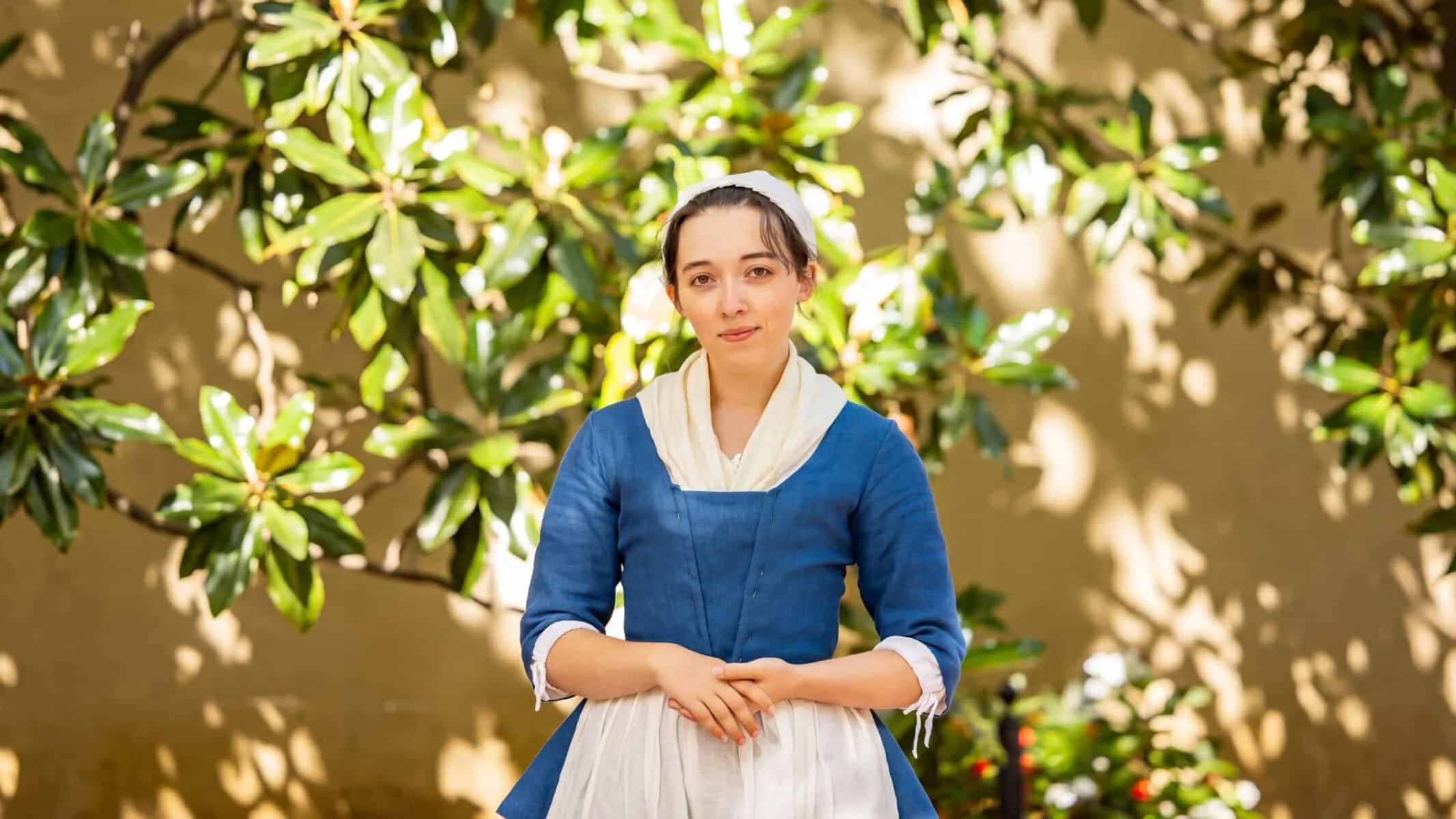
The Betsy Ross House at 239 Arch Street is remembered as a historic Philadelphia home, but its day-to-day interpretation also brings a less familiar part of the city’s working history into view: upholstery. Madeline Burk, a Historic Philadelphia History Maker who portrays Ross, spends her time connecting visitors with the woman and the practical skills associated with her trade.
That work reaches beyond costume and scripted storytelling. Burk and other History Makers sew objects for the house and shop, including furnishings made for museum collections and projects for other institutions. Their work gives visitors a tangible route into the material culture of the 18th century, where textiles, furniture and domestic labor were part of everyday life.
For Burk, the role grew out of her existing work as a storyteller with Historic Philadelphia. The organization sought another performer for the part and considered people already on staff. Her audition included telling a historical story and answering questions about instruments and memorization. The practical test proved more daunting: she had to sew a straight running stitch in linen. By her own account, that portion didn’t go especially well.
A role shaped by the house and its craft
Burk was drawn to Ross as both a historical figure and a character to perform. Ross lived an ordinary life by the standards of her own time, she says, yet her story has traveled widely. The surviving picture of Ross is limited, but Burk sees enough in it to portray someone with strong convictions, a distinct manner and the resolve to defend her choices.
Getting into character begins with the clothes. Corsetry affects how Burk moves and breathes, and can change how she speaks. Once her hair is arranged under the cap, the reflection in the mirror helps mark the shift. She also adjusts her posture and pays closer attention to her words. The period costume, in other words, shapes the performance physically as well as visually.
Burk’s work at the house has made her a more capable stitcher. She didn’t expect upholstery to become such a substantial part of the experience, but the hands-on work has taught her techniques she can use beyond the museum. Some methods and materials have changed over time; others still have practical value when repairing clothing, furniture and household items.
Among her favorite projects are miniature bed sets. The team has made horsehair-stuffed mattresses and doll-bed curtains from cotton chintz, including valances around the beds. Each set takes a different approach. Burk points to the way bed curtains can reflect the person they belong to, and says that individuality carries through in the miniature versions as well.
From doll-bed curtains to flags
The shop’s work extends beyond the doll beds. History Makers have made curtains for a camp bed intended for Fort Ticonderoga, and they sew flags as well. Those projects demand patience and a willingness to correct mistakes, particularly when a long seam runs across a broad stretch of fabric.
Burk’s sewing advice is practical: use running stitches when making the felled seams on a flag. A conventional approach using a backstitch followed by a whip stitch can make errors harder to undo. With lengthy seams, mistakes are likely to happen; the useful skill is being ready to unpick and repair the work.
That attention to craft complements the house’s interpretation of Ross as an upholsterer. The trade isn’t just a biographical detail. It gives the performers a way to discuss how people made and maintained the objects around them, and it connects the historic home to work that visitors can see and understand.
Keeping visitors inside the story
Burk says extensive training gives her a substantial base of knowledge about Ross and the period. When a visitor tries to prompt a break in character, she considers how Ross might have answered. The response might be playful, gently reproving or amused, before the conversation returns to the visit.
For questions beyond her knowledge, Burk works with what she can support. She also makes room for the fact that Ross wouldn’t have known every detail of every occupation. A question about a ship captain or candle maker, for instance, can receive an honest admission that the subject wasn’t part of her work.
One story Burk particularly likes to share concerns Ross’s first husband, John Ross. They met while training as upholsterers. Their religious difference posed a barrier: she was a Quaker and he was Anglican. They eventually married in a New Jersey tavern and returned to Philadelphia. Ross was read out of her Quaker meeting and became Anglican for several years.
Burk sees that account as revealing a woman prepared to make difficult personal choices. Her portrait of Ross is stubborn, spirited and self-directed: someone who chose whom to love and held to her beliefs. The story also brings the house’s trade history into the personal narrative, linking romance, religion and apprenticeship.
A home, remembered through human details
Burk believes preserving history matters even as digital tools become more prominent. The past can help people recognize recurring patterns, she says, while also keeping attention on forms of human expression and connection that technology can’t recreate. At the Betsy Ross House, that idea takes a physical form: visitors encounter a home, a costume and handmade objects rather than history only as text on a screen.
Some of the details are unexpected. Ross married three times and, according to Burk, was buried three times. She also never owned property; she rented throughout her life. That last fact gives the familiar figure a different relationship to housing: the woman associated with one of Philadelphia’s best-known homes was herself a renter.
Asked to imagine Ross’s ideal home, Burk pictures a comfortable place filled with upholstered goods, perhaps more luxurious than Ross could have afforded. But the essential qualities would be modest: room to work, a place to live, and comfort with family. The answer suits the story Burk tells at 239 Arch Street—a home understood through its work and the people who made a life there.
Plan a visit
Visitors can find details about the house at the Betsy Ross House on Redfin. The source offers registration for free admission on November 7, courtesy of Redfin. More historic properties are featured in Redfin Presents Iconic Homes of America.
The post Behind the Seams: An Interview With Betsy Ross, America’s Most Famous Upholsterer appeared first on Redfin | Real Estate Tips for Home Buying, Selling & More.